OLED Guard Pro
OLED Burn-in : 1 Year Update
Uploaded by Auto-imported
About OLED Guard Pro

Protect the pixels that stay still
Adaptive OLED protection for work, gaming, and multi-monitor PCs.
Taskbars, browser controls, editing panels, dashboards, and game HUDs can remain unchanged for hours, causing some OLED pixels to age faster than others.
OLED Guard Pro analyzes brightness, motion, stability, and exposure over time. As risk builds, it gradually
dims the affected areas. When the content changes, visible protection releases promptly instead of lingering over the
new scene.
Use one simple Intensity control and let Autopilot handle the rest, or open the advanced controls and tune the
engine yourself.
Protection that adapts — and lets go
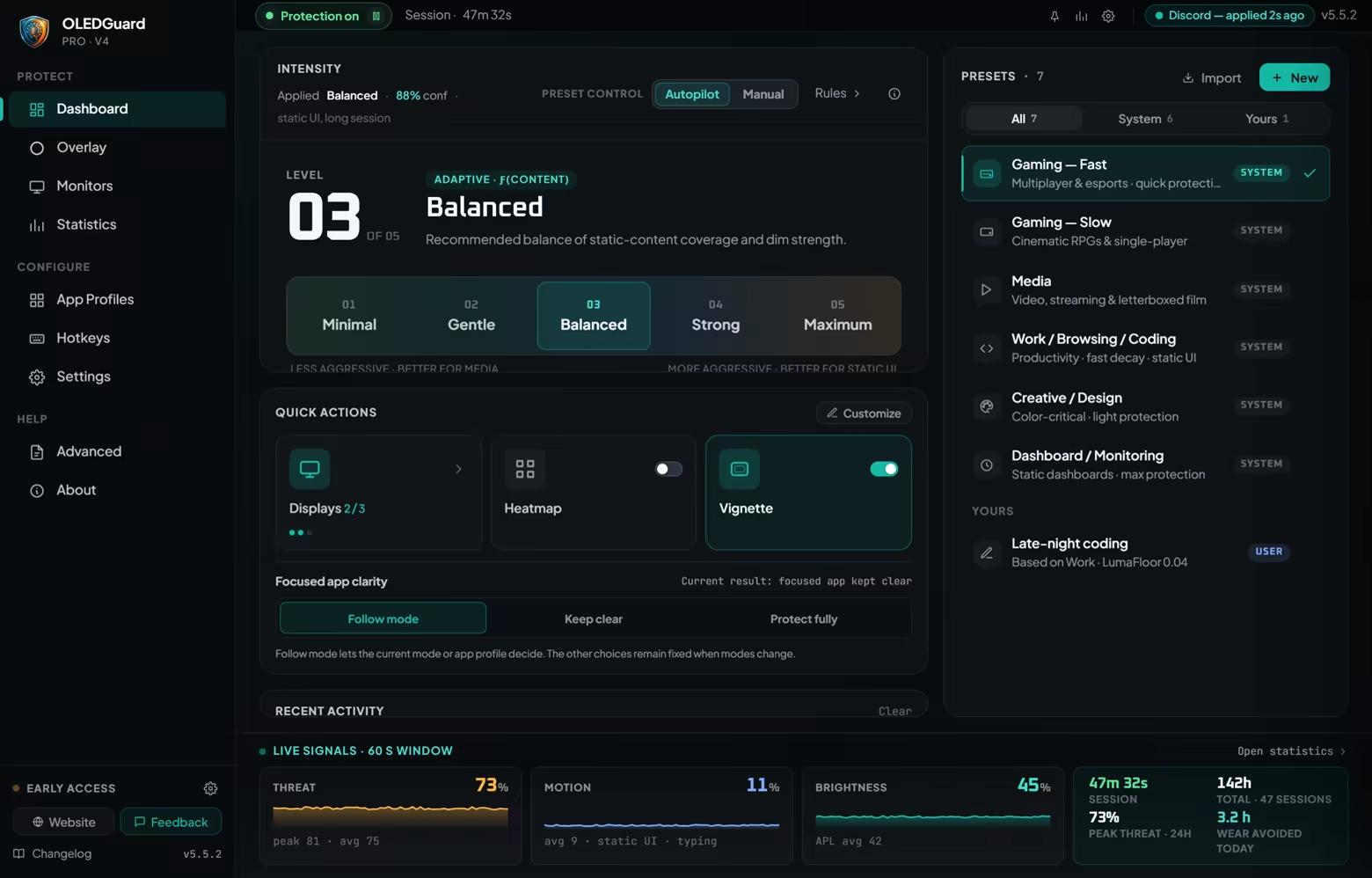
OLED Guard separates how quickly protection builds from how quickly obsolete protection disappears.
Relaxed waits for content to remain static for a long time.
Balanced provides natural timing for everyday work and slower games.
Responsive protects persistent elements faster.
Auto selects a tier from the current activity and tells you what it chose and why.
Changing Responsiveness does not make old protection remain on changed content. Every tier is designed to release
promptly when the protected shape is no longer present.
Built for borderless fullscreen gaming
OLED Guard Pro continues operating over windowed and borderless fullscreen games without injecting code into the
game or modifying its rendering engine.
Game IQ (Beta) learns where each game places persistent HUD elements such as health bars, minimaps, scores,
and ability icons.
HUD layouts are learned separately for each game.
Recognized HUDs remain protected during controller play, spectating, pauses, and hands-off moments.
The current screen is checked before remembered protection is displayed, so an old score, message, or HUD shape does not remain over a menu, replay, or replacement scene.
Learning and saved HUD regions remain local to your PC.
Choose Gaming — Fast for multiplayer and esports, or Gaming — Slow for RPGs, strategy games, and
longer cinematic sessions. Autopilot can choose automatically.
Compatibility note: Windowed and borderless fullscreen games are supported. A true legacy exclusive-fullscreen game cannot display a Windows overlay; OLED Guard detects that state, pauses presentation, and resumes when the game returns to a composited mode.
Six presets for different kinds of content
Gaming — Fast
Gaming — Slow
Media
Work / Browsing / Coding
Creative / Design
Dashboard / Monitoring
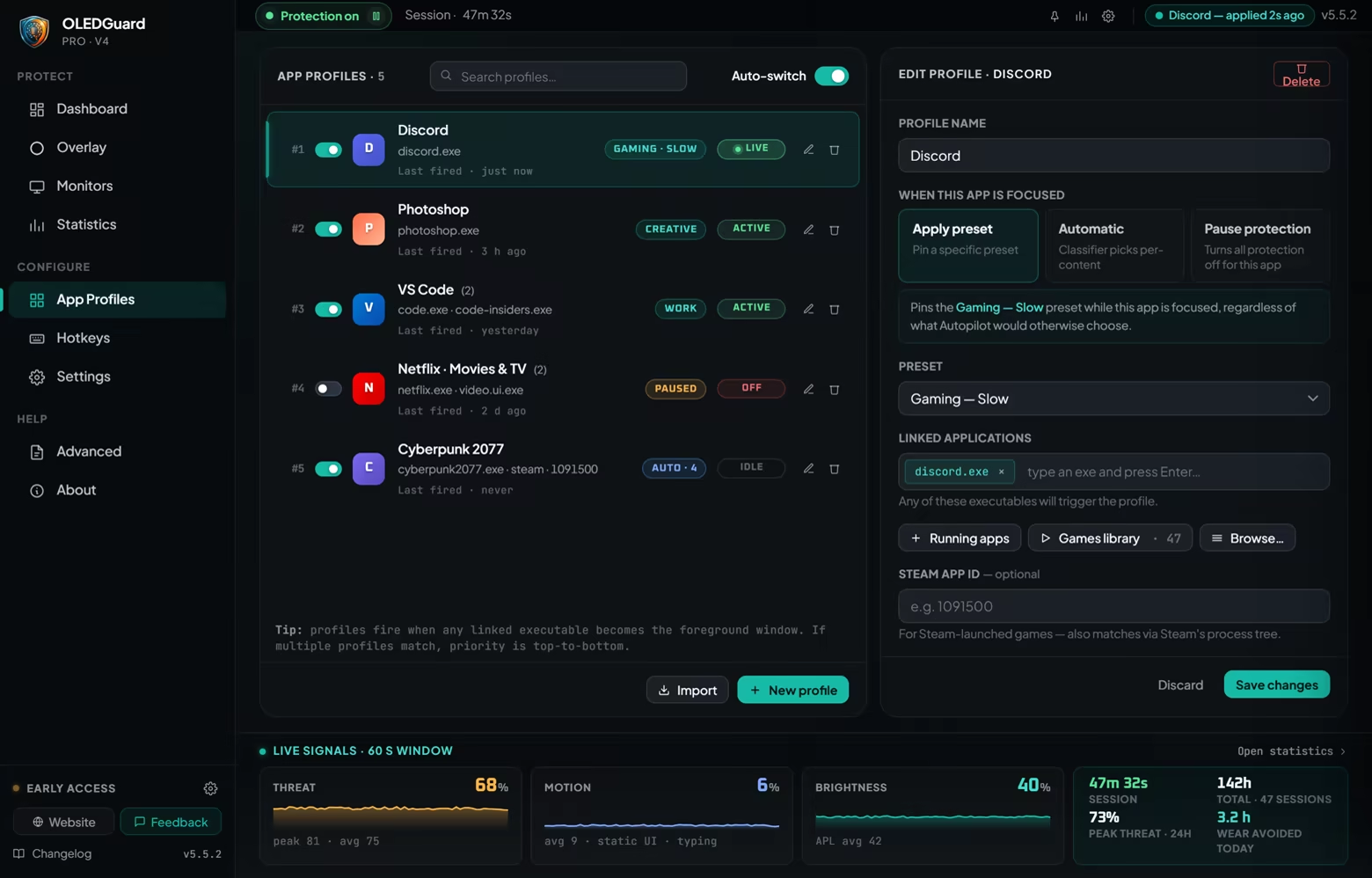
App Profiles can automatically activate a preset and optional Intensity override whenever a selected application
becomes active. Pick an installed Steam game, a running application, or any executable on your PC.
Focused-app behavior is one clear choice: let protection Follow mode, Keep the focused app clear, or Protect it fully.
Independent multi-monitor protection
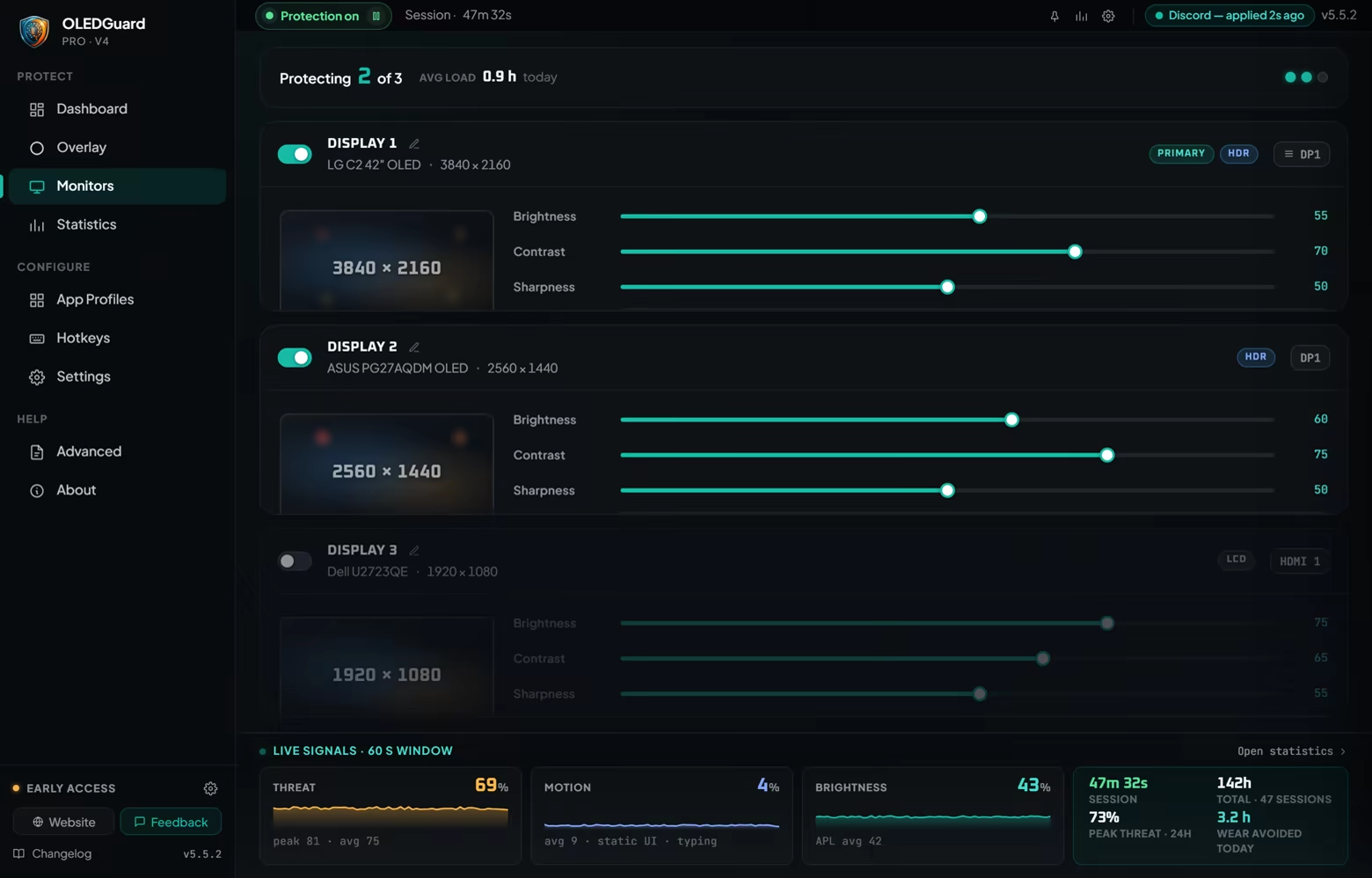
Every connected display receives its own capture, exposure history, and protection state. You can enable or disable
protection separately for each monitor without disturbing the others.
OLED Guard supports modern desktop configurations including HDR, high-refresh displays, G-Sync and FreeSync, mixed-DPI layouts, docking, and monitor hot-plugging.
Away Mode goes further while you are gone
After a configurable idle period, Away Mode applies a deep, uniform overlay dim.
If a monitor supports DDC/CI brightness control, OLED Guard can also lower its hardware brightness to 20% of that
monitor’s range. It never raises a display that is already dimmer, and restores each monitor’s exact previous value
when you return or quit.
Restore information is saved before brightness changes, allowing OLED Guard to recover the original level after an
interrupted session or restart.
Choose how protection looks
Fine Grain adds a subtle moving texture that helps soften visible banding.
Smooth provides clean, even dimming without a visible texture.
Seven dark tint choices let you match the appearance to your display.
Optional per-side vignette controls provide additional protection around screen edges.
Dark Mode offers a predictable, uniform full-screen dim whenever you want it.
See what the engine is doing
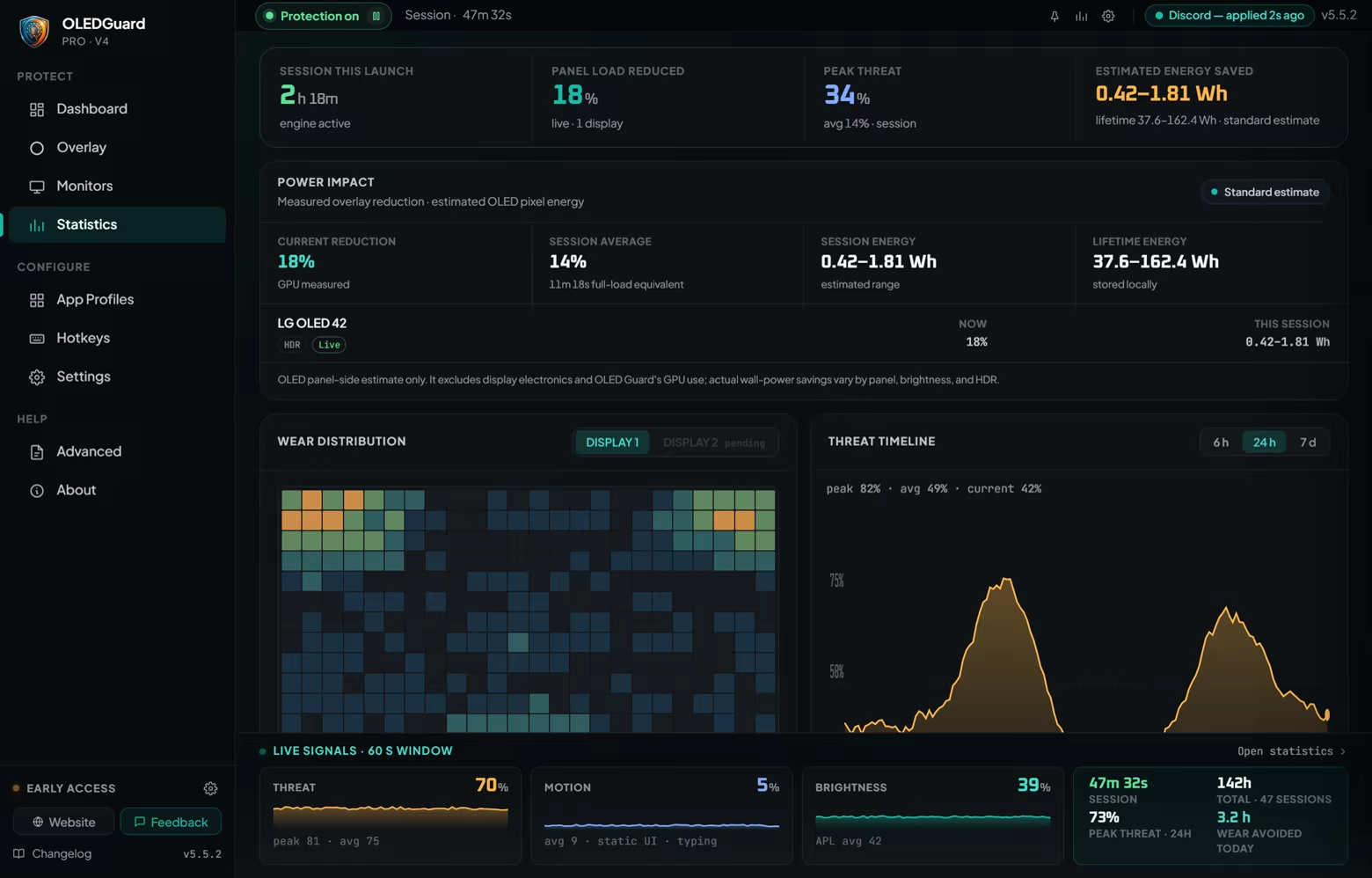
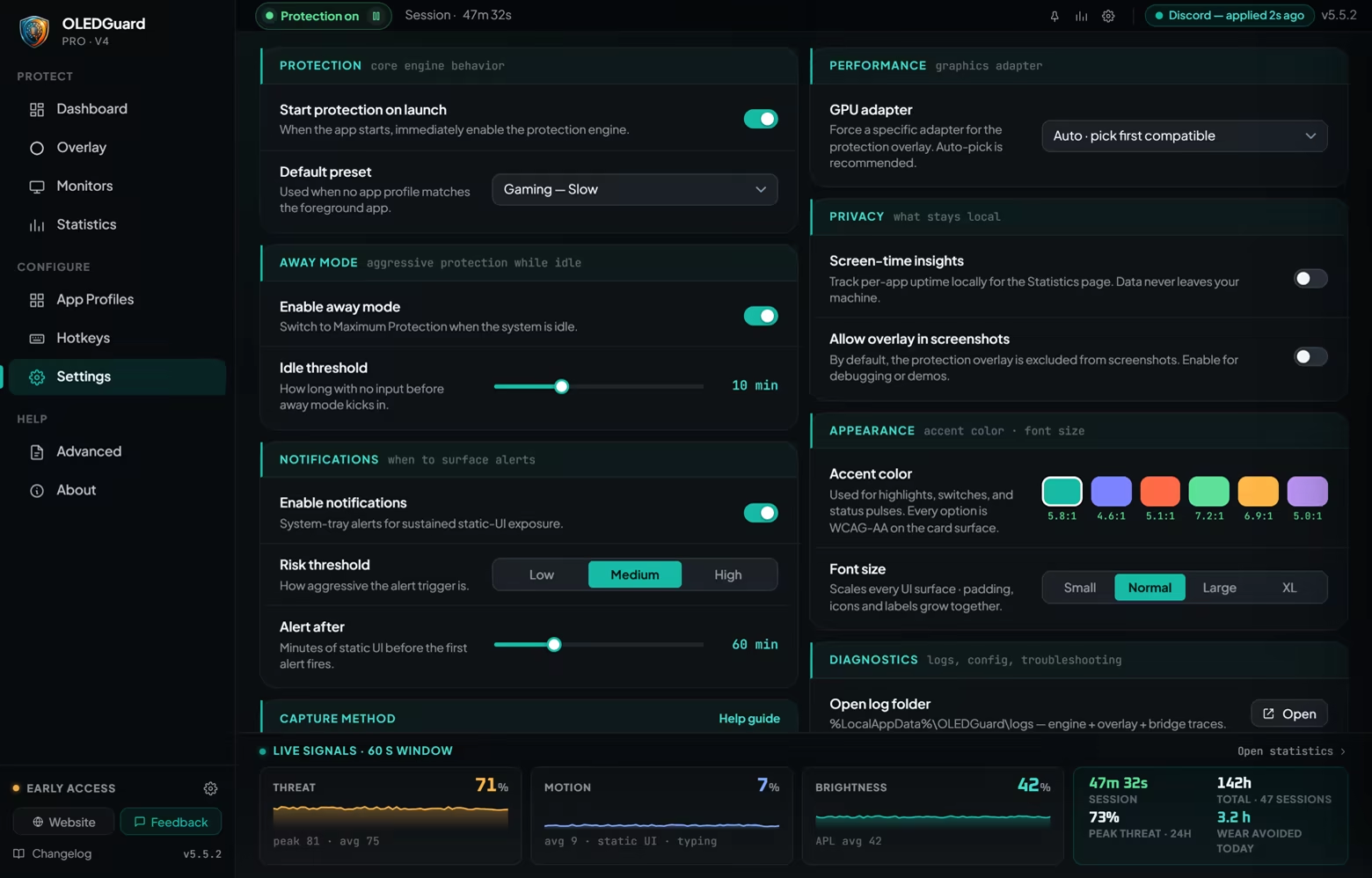
The dashboard explains its decisions through live brightness, motion, threat, capture-health, and coverage signals.
Statistics include:
Current and average panel-load reduction
Session and lifetime protection history
Threat timelines and wear distribution
Estimated OLED pixel-energy savings
OLED Guard’s own live CPU, GPU, and memory use
Local and private by design
Screen analysis runs locally through a GPU-accelerated pipeline. Captured frames remain on your computer and are
not uploaded to a cloud analysis service.
Game IQ’s learned HUD information is also stored locally. Visualization tools are available when you want to
inspect where protection is being applied and why.
Key features
Adaptive per-pixel OLED protection
Prompt release when screen content changes
Game IQ with local per-game HUD learning
Windowed and borderless fullscreen gaming support
Autopilot with visible decisions and explanations
Six purpose-built presets and custom presets
Application-specific profiles
Independent multi-monitor pipelines
HDR and variable-refresh display support
Away Mode with optional DDC/CI brightness reduction
Fine Grain and Smooth overlay finishes
Vignette and uniform Dark Mode
Live protection, resource-use, and power-impact statistics
Configurable global hotkeys and system-tray operation
Important to know
OLED Guard is preventative software intended to help reduce uneven OLED wear. It cannot repair burn-in that already exists, and no software can guarantee that burn-in will never occur.
DDC/CI features depend on the monitor, connection type, firmware, and whether DDC/CI is enabled in the monitor’s settings.
Protect your OLED while you work, create, watch, and play.
Screenshots
System Requirements
PC
Minimum
Minimum: Requires a 64-bit processor and operating system OS: 10 Processor: dual core x64 Memory: 2 GB RAM DirectX: Version 11 Storage: 50 MB available space
Recommended
Recommended: Requires a 64-bit processor and operating system OS: 11 Processor: quad core x64 Memory: 4 GB RAM DirectX: Version 12 Storage: 300 MB available space
Mac
Minimum
Minimum:
Recommended
Recommended:
Linux
Minimum
Minimum:
Recommended
Recommended: